Introduction
Senior Software Engineer @ Microsoft, Azure AI Search — building the retrieval that grounds enterprise AI in the right knowledge at billion-vector scale.
My work sits at the intersection of information retrieval, vector search, and applied machine learning — improving relevance for complex global queries, grounding LLMs and multi-agent workflows in governed enterprise knowledge, and turning research prototypes into production-grade agentic retrieval and RAG capabilities.
Earlier, as a Software Engineer II, I delivered the core of our vector engine — including quantization techniques that cut customer costs by 8–32× and latency by up to 20×, a hybrid-search relevance stack, and an extensible facet-aggregation engine built on formal grammar and parsing. I care deeply about performance, correctness, and distributed systems, and I'm often the engineer who root-causes the gnarliest production incidents.
Beyond shipping code, I love building communities. I graduated with a B.Eng in Electrical & Computer Engineering (97% CGPA, 20+ awards worth over $100K), drove a 200+ person conference from vision to reality, and grew a Senior's Program to 180+ volunteers and 650+ participants while delivering technical talks to 250+ engineering students. I also led a student team to train a deep neural network for human pose estimation from randomly initialized weights — check it out on Streamlit.
Please reach out if you'd like to connect!

Work Experience
Senior Software Engineer, Microsoft Azure AI Search
Mar. 2025 - Present | Redmond, WA
C++, C#, Java, Python | Vector Search, Agentic Retrieval, Information Retrieval, RAG, Distributed Systems, Graph Databases, Authentication, Durable Systems
- Engineering lead for a first-of-its-kind vector-search diversity capability, owning end-to-end scoping, design, implementation, and refinements. k-nearest-neighbour vector retrieval returns redundant evidence for complex, corpus-spanning queries; I identified key production constraints and adapted state-of-the-art Microsoft Research work into a design that broadens retrieved evidence for higher-quality answer synthesis and operates at billions-of-vectors scale.
- Led research-to-production delivery for agentic-retrieval filter and boost generation. Set the technical direction across research and product teams by reformulating an unbounded filter-synthesis problem into a bounded, verifiable operator set over specific filter categories — then produced the production usage analysis that proved the reduction covered real customer workloads and brought both teams to consensus. Implemented the production translation; multiple improvements shipped to Public Preview.
- Integrated Azure AI Search retrieval into agent workflows - grounding LLM agents in governed, indexed enterprise knowledge across tool calling, multi-agent orchestration, and Retrieval Augmented Generation.
- Architected a benchmarking system from scratch to profile highly variable agentic-retrieval workloads across CPU, memory, and throughput - modeling latency distributions, tool-calling iterations, and dependency patterns; proposed and shipped the production billing model for agentic retrieval during launch of a new serverless enterprise search offering; identified and resolved memory optimizations during benchmarking.
- Serve as a technical leader at the intersection of information retrieval, vector search, Azure OpenAI, and agent orchestration - mentoring and onboarding engineers, leading design reviews, and driving deeply technical architecture decisions.

Software Engineer II, Microsoft Azure AI Search
Jun. 2022 - Feb. 2025 | Redmond, WA
C++, C#, Java, Python | Vector Search, Vector Quantization, Information Retrieval, RAG, Distributed Systems
Drove vector storage, quantization, and relevance for Azure AI Search's vector retrieval engine, spanning billions of embeddings.
- Drove vector quantization from Public Preview through to GA - now widely adopted by customers - delivering 8-32x cost savings and up to 20x latency reduction through binary vectors, scalar and binary quantization, and SIMD-accelerated distance computation.
- Strengthened the relevance stack by designing hybrid-search subscore fusion and score thresholding to improve result quality across blended vector and keyword retrieval.
- Designed and shipped a data-driven quota-enforcement mechanism for HNSW indexes tied to physical resource utilization, cutting limit overshoot by 100x through cross-team design collaboration.
- Owned end-to-end delivery of an extensible facet-aggregation engine from spec, building a custom lexer-parser-evaluator that applies BNF grammar, the shunting-yard algorithm, and Reverse Polish Notation to parse, simplify, and validate expressions - backed by extensive A/B test coverage.
- Hardened the vector search engine with a new test suite that caught a critical bug in a new quantization algorithm before release.
- Acted as a subject-matter expert and key reviewer - root-causing deeply technical production incidents across teams to rapidly restore customer service and drive durable fixes, while raising reliability through rigorous review of distributed-systems and vector-algorithm changes.
Software Engineer, Microsoft Azure AI Search
Jul. 2021 - May 2022 | Redmond, WA
- Delivered the new index alias feature to Public Preview, letting customers repoint applications to a different underlying index with no code changes or downtime.
- Modernized a core telemetry-database table through a phased, zero-downtime migration that preserved data integrity and delivered a 50-100x query speedup.
Software Engineer Intern, Microsoft Azure Cognitive Search
Sep. 2020 - Dec. 2020 | Redmond, WA (Remote)
C# | Search APIs, Backend Services
- Designed and shipped the second most requested API and backend feature on the Azure Cognitive Search team, written in C# and released under a preview API.
Software Engineer Intern, Microsoft Azure Search (AI Platform)
Jun. 2019 - Aug. 2019 | Bellevue, WA
TypeScript | Search UX, Developer Tooling
- Built a dynamic search-website generator with query suggestions and filtering options in TypeScript.
- Improved the Azure Search portal experience with a new JSON editor and search-website customization.
- Partnered with designers, engineers, and program managers to scope the feature set.
Software Developer Intern, Microsoft Garage
Jan. 2018 - Apr. 2018 | Vancouver, BC
C#, TensorFlow | Offline Machine Learning, Mobile
- Built a cross-platform mobile app leveraging offline machine learning for chest X-ray classification in C#.
- Built the image-processing pipeline, DevOps continuous integration, and an iOS share extension, and integrated the TensorFlow Android binding library; served as the team's Git expert.
Education
Bachelor of Electrical & Computer Engineering
Sep. 2016 - Apr. 2021 | University of Victoria, Victoria, BC
Cumulative GPA: 97%
Graduated with a 97% cumulative average in Electrical & Computer Engineering, spanning distributed systems, algorithms, signal processing, embedded design, and machine learning. As a Jamie Cassels Undergraduate Research Award recipient, I researched hardware acceleration for machine-learning neural networks — and I earned 20+ scholarships and awards worth over $100,000 along the way.
Projects

Human Pose Estimation using Deep Neural Networks
Jan. 2021 - May 2021
Project and Team Lead for a student team to develop a deep neural network for human pose estimation (HPE) on the COCO-2017 dataset.
I architected our cloud training pipeline, model architecture, and data augmentation method. I led work in model visualization and deployment.
Our model achieves very good performance on almost all images, provided the person is relatively centered and about 60-95% of the vertical image height (these are limitations we chose due to the tight time constraints of the project). It struggles in some extremely difficult images, typically with highly overlapped people or heavily occluded joints.
The model performs single-person single-image 2D HPE with a kinematic model and a heatmap-based approach for joint prediction rather than a regression on joint locations. The model was trained from scratch with random weight initializations, and our team developed much of the plumbing from scratch as well.

Semantic Road Segmentation using Convolutional Neural Networks
Jul. 2020 - Sep. 2020
- Successfully trained a U-Net CNN on the KITTI Road dataset using Keras, achieving up to 99.1% F1 score and 91% in the worst case.
- Designed and implemented the full training pipeline, including data generator, training/testing scripts, custom loss functions, and cloud training setup using Google Colab.
- Tuned hyperparameters and used data augmentation to improve model generalization under varied conditions.
- Researched and designed the network architecture by analyzing state-of-the-art computer vision literature.
- Resolved architectural and training bugs in the decoder and segmentation logic to ensure stable performance.
- Evaluated model using pixel-based metrics and addressed edge cases like shadows, occlusions, and road artifacts.

Computer Vision Project on Monocular Depth Estimation
Jan. 2020 - May 2020
- Implemented a limited version of Monodepth2, a self-supervised monocular depth estimation algorithm, in TensorFlow 1.13.1, replacing the original PyTorch implementation to improve project feasibility.
- Adapted the model to the DrivingStereo dataset, a large-scale dataset (~136k training image pairs), to enhance depth prediction generalization compared to the smaller KITTI dataset.
- Designed and trained a fully convolutional U-Net with a ResNet-18 encoder, optimized for stereo image inputs at 640×192 resolution.
- Integrated self-supervised learning using stereo photometric reconstruction and edge-aware smoothness loss without requiring ground truth depth data.
- Implemented multi-scale training loss, auto-masking for static pixels, and per-pixel minimum reprojection to improve depth estimation near occlusions and motion boundaries.
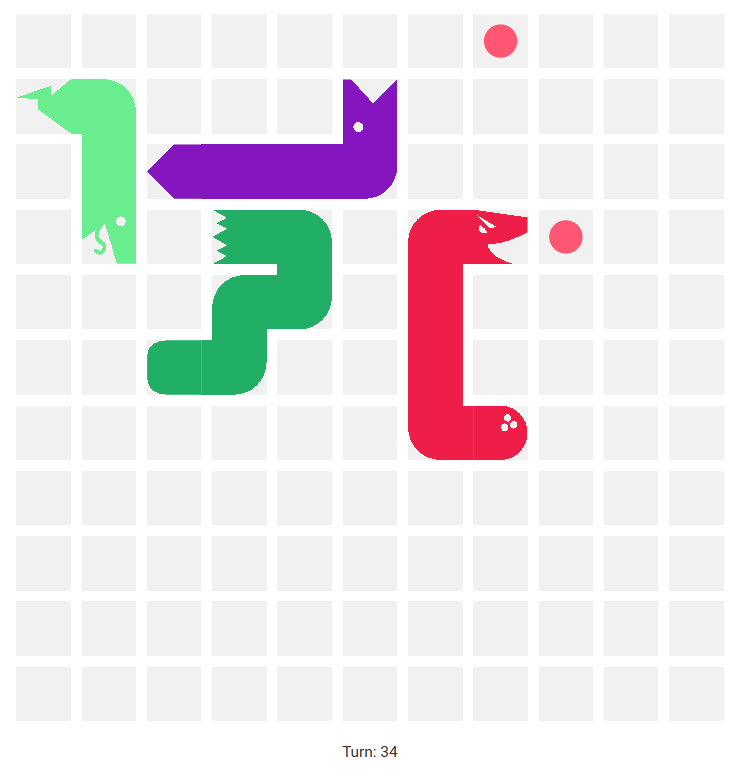
Battlesnake Reinforcement Learning AI Design
Jan. 2019 - May 2019
- Challenge: Classic snake game mechanics, but with up to 7 opponent snakes. Collisions with longer snakes or starvation result in death. Design algorithm to control snake in real-time game. Goal: Survive the longest.
- Trained keras-rl reinforcement learning model with a combination of self-play and publicly available snakes.
Discrete Cosine Transform Optimization in C & Assembly
- Achieved a 10x speedup over a naive implementation of the Discrete Cosine Transform using C and assembly-level optimizations.
- Configured CMake for platform-agnostic compilation, profiled hotspots with Valgrind, and hand-wrote a custom assembly operator for the critical path.
Leadership
Industry Mentor, SENG 321 — Requirements Engineering
Aug 2026 - present
University of Victoria
- Industry mentor for SENG 321 Requirements Engineering, a third-year software engineering course at the University of Victoria.
- Authored an open-ended industry challenge statement drawn from unsolved problems in production AI systems, then coach a student team through requirements elicitation, stakeholder analysis, scoping, and design rationale as they take it from an ambiguous brief to a clickable prototype. Biweekly reviews focused on the quality of their reasoning.
Industry Mentor, SENG 321 — Requirements Engineering
Sep 2024 - Dec 2024 · 4 mos
University of Victoria
- Industry mentor for SENG 321 (Requirements Engineering), one of 18 mentors providing real-world challenge statements to a 120-student cohort.
- Authored a challenge on the reliability and safety limitations of LLM-powered chatbots — hallucination mitigation, content moderation, long-context management, integration of real-time and private data, and mathematical reasoning — and served as the client stakeholder that student teams elicited requirements from.
- Met with teams through the term to review requirements artifacts and design iterations, challenging scope decisions, technical assumptions, and evaluation strategy.
Founder & Program Director, Senior's Digital Literacy Program, University of Victoria
Jul. 2015 - Oct. 2021 · 6 yrs 3 mos
University of Victoria
- Founded and directed a seniors' digital literacy program for six years, growing it to 180 volunteers and 650+ seniors served across 30 workshops, and handing it off to successors who sustained it beyond my tenure.
- Secured University of Victoria departmental sponsorship, program funding, dedicated computer lab space, and administrative support to establish and institutionalize the program on campus.
- Designed a two-stream curriculum running concurrent beginner and advanced sessions — personally instructing one stream while volunteers circulated for one-on-one assistance — with both labs regularly filled to capacity.
- Built a recurring volunteer pipeline through partnerships with the UVic Computer Science Course Union and two local high schools, recruiting, training, and coordinating new cohorts each term.
- Sustained consistently high participant satisfaction and strong repeat attendance, with past participants emailing years afterward to ask when the next session would run; grew enrollment through local newspaper and community-centre coverage.
Chair & Vice-Chair, IEEE Student Branch
Sep. 2019 - Jan. 2021 · 1 yr 4 mos
University of Victoria
- Co-led the University of Victoria IEEE Student Branch under a shared leadership model, alternating Chair and Vice-Chair terms with a co-lead, directing a 6-person executive and a membership of 70 engineering students.
- Built and delivered a 14-workshop technical skills series reaching 350+ students — roughly five times the branch's membership — spanning Git and version control, machine learning, circuit design, and hardware prototyping.
- Authored much of the curriculum and personally instructed the Git, machine learning, and circuit design sessions, covering both the software and hardware halves of the program.
- Secured $1,000 in funding and dedicated lab access to supply materials for hands-on sessions, enabling equipment-provided instruction rather than lecture-only delivery.
- Recruited alumni and industry engineers as guest instructors, and established the series as a recurring program that continued after my term.
Founder and Conference Chair, UVic Tech & Business Strategy Conference
Aug. 2019 - Nov. 2019 · 3 mos
University of Victoria
- Conceptualized and secured university buy-in for a 200+ attendee conference exploring the intersection of technology and business strategy.
- Built and led the organizing committee, defining the conference mission, delegating responsibilities, and ensuring seamless execution.
- Managed logistics, including venue selection, scheduling, and speaker coordination, balancing stakeholder expectations and budget constraints.
- Recruited and engaged industry-leading speakers, strengthening university-industry relations.
- Emceed the event, facilitating discussions and ensuring a smooth experience for speakers and attendees.
Awards & Achievements
20+ scholarships and awards valued at over $100,000, including:
- Schulich Leader Scholarship (2016) — $80,000 full-ride; one of 50 awarded nationally, chosen from ~1,500 nominees (one per Canadian high school) among 300,000 graduating students, for STEM excellence and leadership.
- National Champion, Michael Smith Science Challenge (2014) — national-record 97.5% among 1,700+ candidates.
- Governor General's Academic Medal, Bronze (2016).
- Jamie Cassels Undergraduate Research Award (2019) — research on hardware acceleration for machine-learning neural networks.
- 1st Place, Western Engineering Competition — Senior Design (2020) — built a robot to collect Martian artifacts; competed against 50 competitors from 11 other engineering universities from Western Canada.
- 1st Place (3×), UVEC Engineering Competition — Senior Design (2017, 2018, 2019).
Contact Me

I'd love to connect, so please feel free to reach me on any of these platforms.
© Robert Lee | Made with ❤ with HTML, CSS & JavaScript. Adapted from Rosacodes